
- Home
-
Solution
- Product

 Your Position: Home > News > Enterprise News > How to deal with the sewage from the Concrete batching plant?
How to deal with the sewage from the Concrete batching plant?
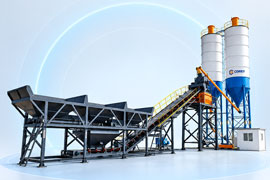
A concrete batching plant primarily consists of five systems: the main mixer, material weighing system, material conveying system, material storage system, and control system, along with other ancillary facilities. Compared to aggregate metering at a station, floor aggregate metering eliminates four intermediate steps and utilizes vertical feedstock, saving time and significantly improving production efficiency.

During the concrete production process, equipment and vehicle cleaning generate significant amounts of wastewater. This wastes resources significantly, and direct discharge can also cause significant environmental harm. Therefore, wastewater treatment systems in concrete production are being retrofitted to achieve 100% wastewater recovery, achieving zero wastewater discharge standards. So, how should wastewater from a concrete batching plant be treated? How well do you know about this? This article provides helpful information.
In a wastewater treatment system, the various tanks should be arranged in a specific order, interconnected by overflow pipes at the bottom and pumps at the top. When the water level in a tank is insufficient, pumps can be used to replenish the water to maintain a stable level. If the water volume in the tank is high, it will flow back through the overflow pipe, clarifying the water during the process.
The wastewater treatment system renovation primarily includes a concrete truck unloading chute, a sand and gravel separator, a sewage sedimentation tank, a sewage tank agitator, a clarifier, a transfer pump, and a filter press. The conventional system consists of four sewage tanks and three clarifiers. All four tanks are equipped with surface guardrails and agitators. Tanks 1, 2, and 3 are equipped with slurry pumps, while tanks 2 and 4 are equipped with level gauges. Each of the three clarifiers has a sewage pump. The agitators within the tanks operate evenly throughout the cycle, ensuring uniform water quality.
In the Concrete batching plant, a water trough is connected to the sewage tank, collecting rainwater that flows into the tank to maintain cleanliness and reduce operating costs. Dedicated water troughs at the main station and vehicle wash system direct production wastewater to the sewage tank for centralized treatment. Through the renovation of the drainage system within the Concrete batching plant, wastewater is prevented from flowing out. Treated wastewater is then directly supplied to the mixing plant and used for vehicle cleaning after inspection. The waste residue can also be used as aggregate, achieving zero wastewater discharge.
Send Enquiry Now
Related News
Troubleshooting methods for common problems with mobile concrete mixing plants
Mobile batching plants may experience various malfunctions during operation. Below are some common malfunctions and corresponding troubleshooting methods:
Features and advantages of foundation-free concrete batching plants
Foundation-free concrete batching plants are a new type of mixing equipment that can be quickly installed and put into production without the need for com
100T bulk cement silo loaded and shipped
Bulk cement silos are essential supporting equipment in concrete mixing plants, primarily used for storing various powdery materials such as cement, fly a
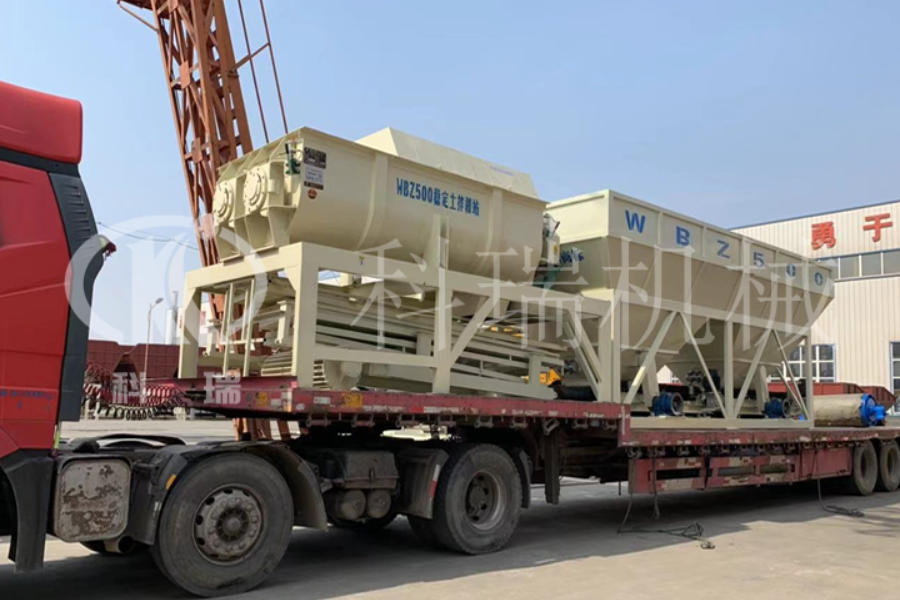
WBZ500 stabilized soil mixing plant equipment shipped
In today's era of accelerated infrastructure construction, the WBZ500 stabilized soil mixing plant, with its stable production capacity, high durability,
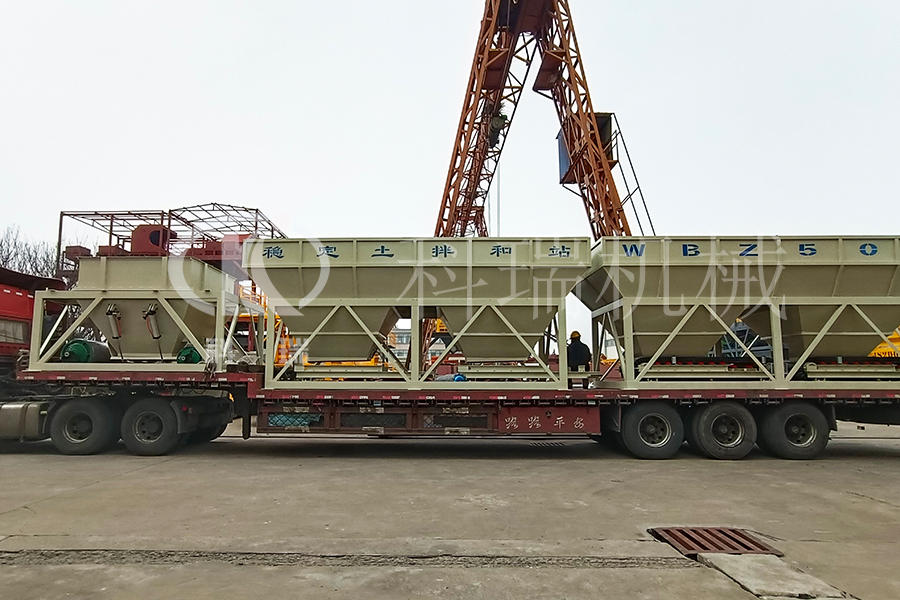
500T stabilized soil mixing plant loaded and shipped
Recently, Corey Machinery's meticulously crafted 500T stabilized soil mixing plant successfully completed production and in-plant joint commissioning. All
Get A QuoteX - Product